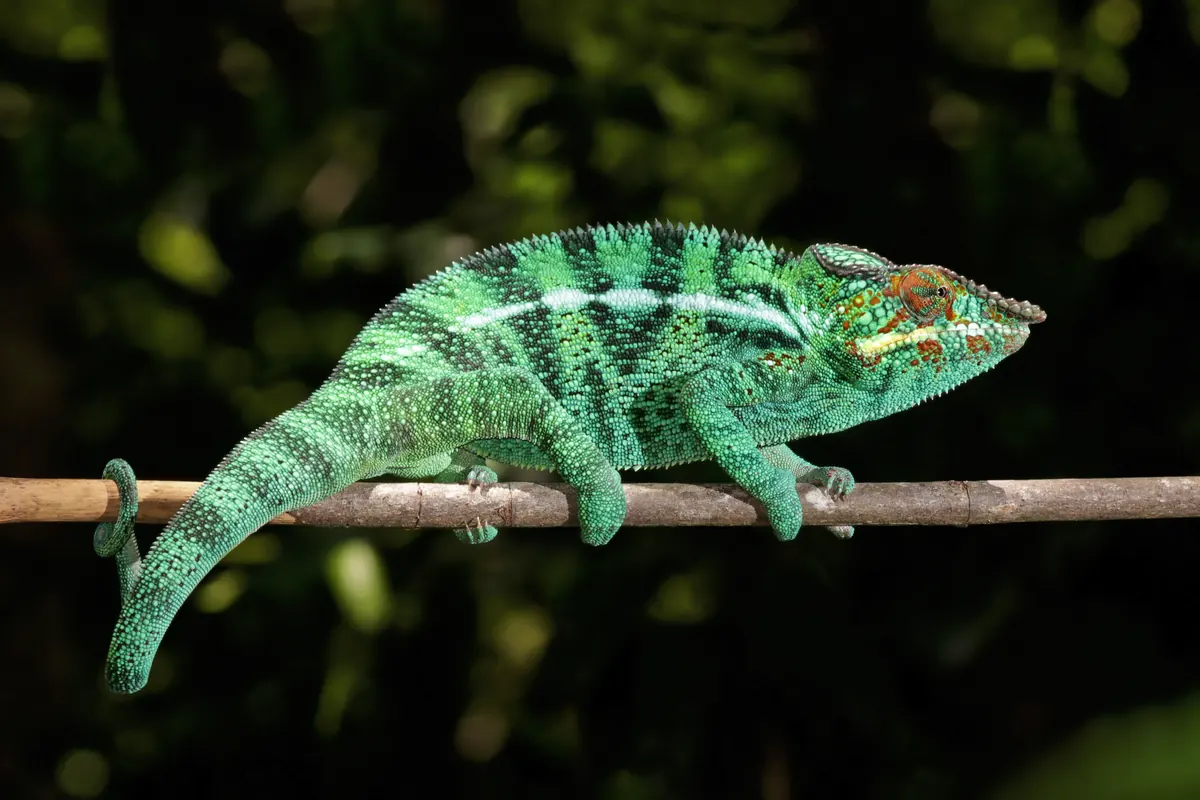
Chameleons move carefully through branches using gripping feet, curled tails, and highly tuned vision. Independent eye movement lets chameleons scan different directions at once before locking onto prey with an extending tongue. Chameleons change color for communication and temperature response as well as camouflage. Forest habitats reward animals that can climb, hide, or move quietly through layered vegetation.
Conservation
Status and habitat pressure
Many chameleons are highly sensitive to habitat loss because they rely on specific vegetation structure and microclimates. Forest protection and responsible wildlife trade controls are especially important for vulnerable species.
Vulnerable species can decline quickly when habitat loss, climate pressure, or human conflict intensifies.
Quick Facts
Things to notice
Chameleons change color for communication and temperature response as well as camouflage.
Many reptiles conserve energy well and can remain still for long periods before a quick burst of movement.
Forest habitats reward animals that can climb, hide, or move quietly through layered vegetation.
Vulnerable species face mounting risks and can decline quickly if habitats continue to shrink.