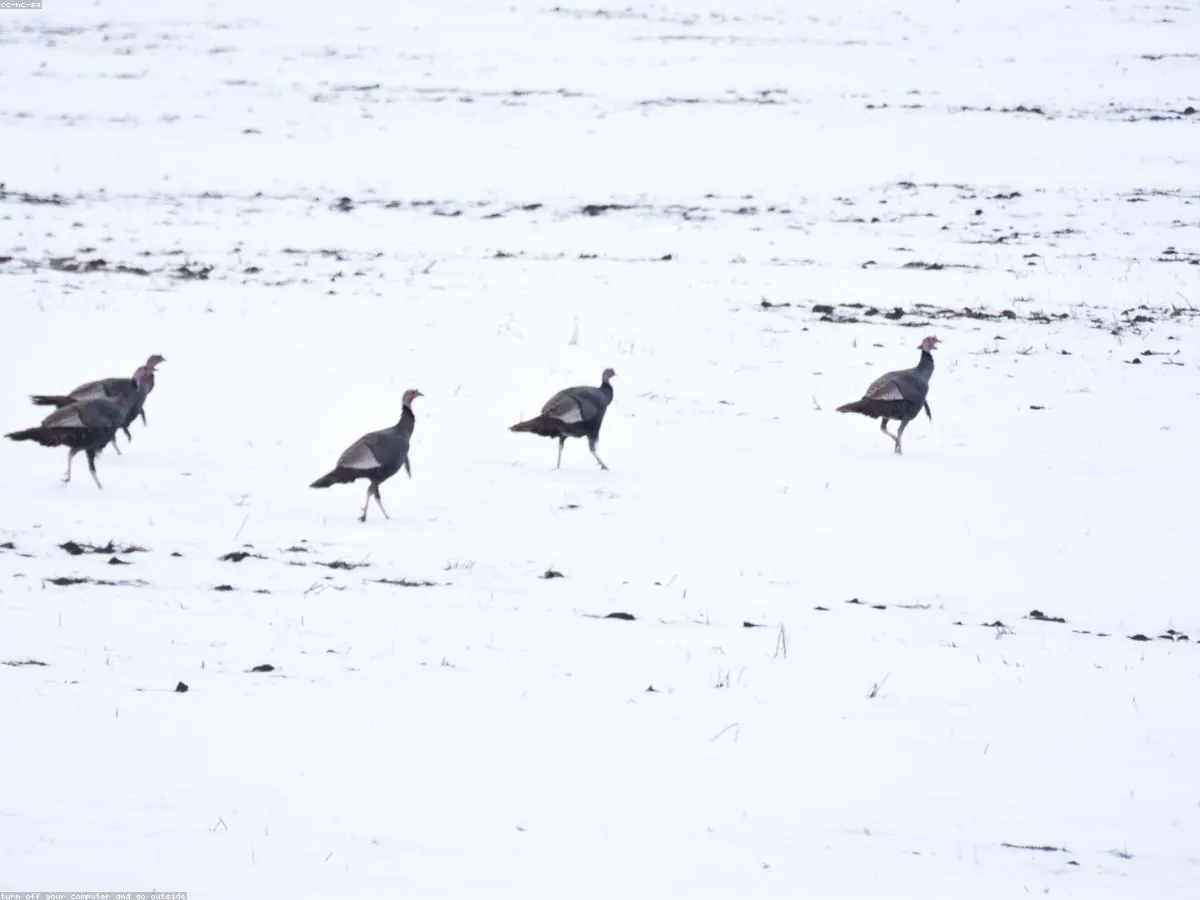
Wild turkeys use open woodland, clearings, and forest edges, scratching leaf litter for seeds, insects, and acorns. Wild turkeys can run quickly and make short explosive flights to reach roosts. Forest habitats reward animals that can climb, hide, or move quietly through layered vegetation.
Conservation
Status and habitat pressure
Stable populations still depend on habitat quality, food availability, and low human pressure. Protecting wild turkey also depends on keeping forest, grassland habitats healthy and connected.
Common species still depend on habitat quality, clean water, food webs, and low disturbance.
Quick Facts
Things to notice
Wild turkeys can run quickly and make short explosive flights to reach roosts.
Bird bones are adapted for efficient movement, balancing strength with low weight.
Forest habitats reward animals that can climb, hide, or move quietly through layered vegetation.
Stable populations still depend on habitat quality, food availability, and low human pressure.