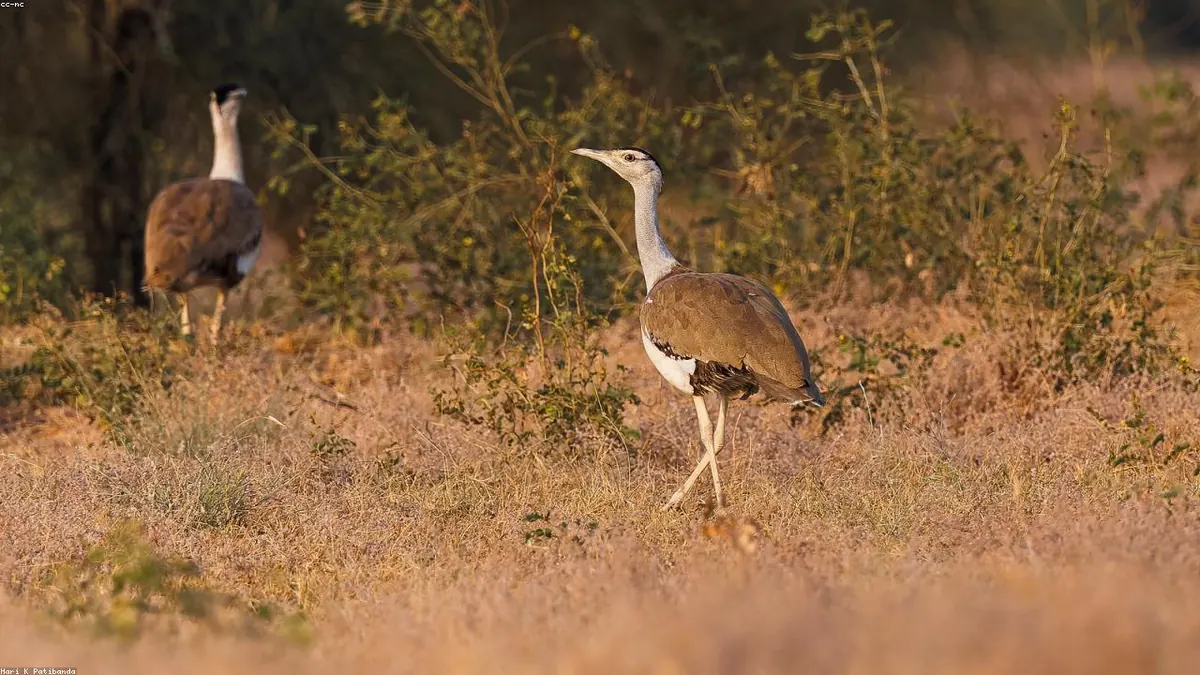
Great Indian bustards are large dry-country birds now restricted to a few fragmented grassland strongholds. Great Indian bustards are among the heaviest flying birds and now survive in small, fragmented dry grassland populations. This species is so rare that power-line collisions can affect the entire recovery outlook. Grassland species rely on visibility, group coordination, and seasonal migration to survive.
Conservation
Status and habitat pressure
Great Indian bustards are critically threatened by habitat loss, hunting history, and collisions with power lines. Every remaining breeding group matters because the population is now extremely small and fragmented.
Critically threatened species often have little room for delay because every remaining population matters.
Quick Facts
Things to notice
This species is so rare that power-line collisions can affect the entire recovery outlook.
Bird bones are adapted for efficient movement, balancing strength with low weight.
Grassland species rely on visibility, group coordination, and seasonal migration to survive.
Critically threatened species often survive in fragmented populations, making every breeding group important.