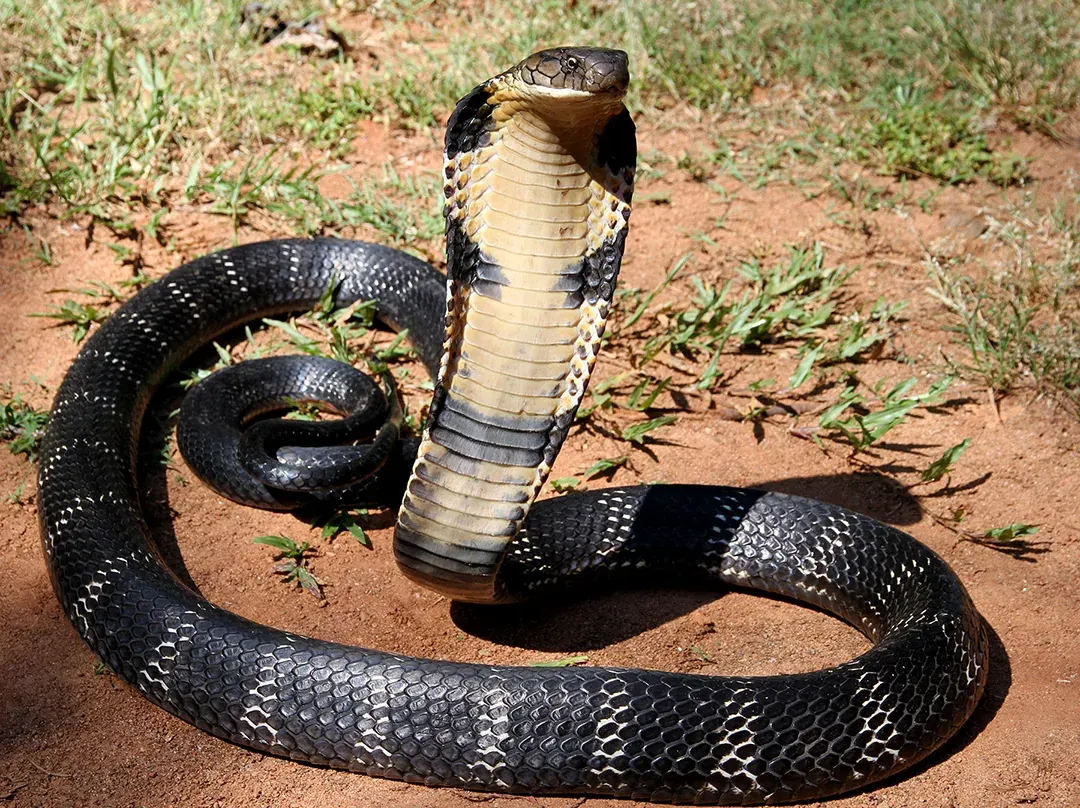
King cobras are intelligent snakes that patrol forest floors and feed primarily on other reptiles. Unlike many other snakes, king cobras often prey on snakes, and females are known for guarding nests. The king cobra is the world's longest venomous snake. Forest habitats reward animals that can climb, hide, or move quietly through layered vegetation.
Conservation
Status and habitat pressure
King cobras are pressured by deforestation, road mortality, direct killing, and capture for trade in some areas. Protecting forest habitat and reducing fear-driven killing are major priorities for this wide-ranging predator.
Vulnerable species can decline quickly when habitat loss, climate pressure, or human conflict intensifies.
Quick Facts
Things to notice
The king cobra is the world's longest venomous snake.
Reptiles depend on external heat sources, so basking and shade are part of their daily routine.
Forest habitats reward animals that can climb, hide, or move quietly through layered vegetation.
Vulnerable species face mounting risks and can decline quickly if habitats continue to shrink.