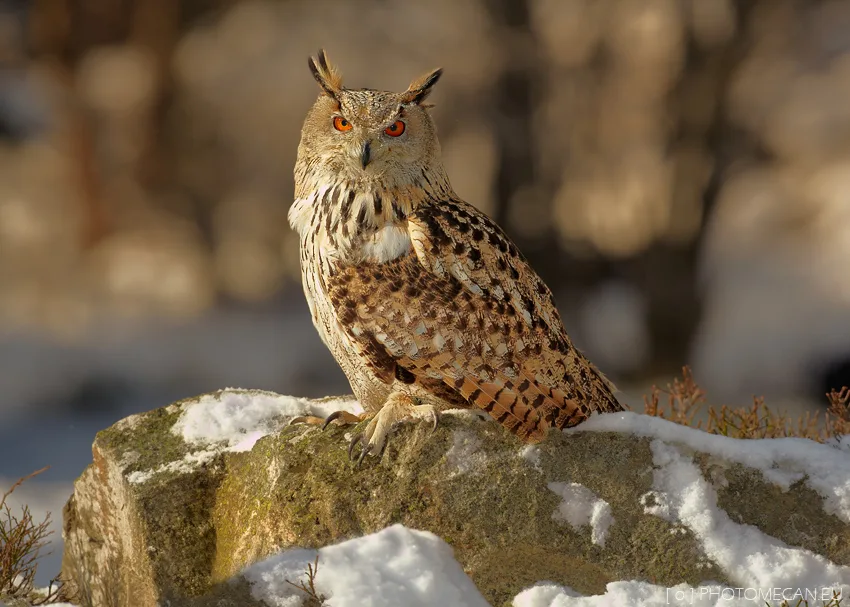
Owls are stealth hunters whose silent flight and forward-facing eyes make them efficient nighttime predators. Large forward-facing eyes, sensitive hearing, and silent wingbeats allow many owls to locate prey in darkness. Specialized feather edges help many owls fly with very little sound. Forest habitats reward animals that can climb, hide, or move quietly through layered vegetation.
Conservation
Status and habitat pressure
Many owl species remain common, but their conservation depends on nesting sites, intact hunting habitat, and low disturbance at key breeding areas. Old trees, woodland edges, and healthy prey populations are especially important for larger owls.
Common species still depend on habitat quality, clean water, food webs, and low disturbance.
Quick Facts
Things to notice
Specialized feather edges help many owls fly with very little sound.
Many birds rely on sharp vision and route memory to navigate long distances.
Forest habitats reward animals that can climb, hide, or move quietly through layered vegetation.
Stable populations still depend on habitat quality, food availability, and low human pressure.