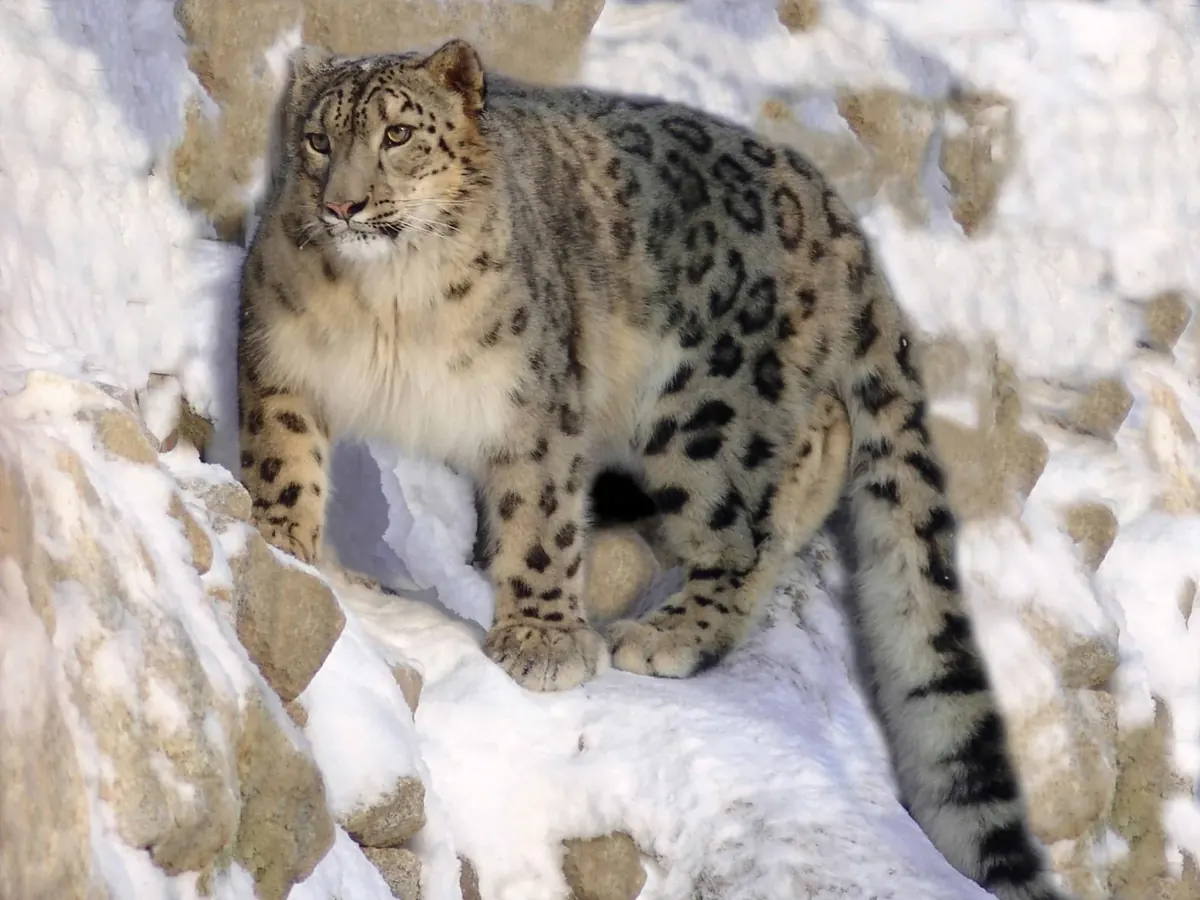
Snow leopards are elusive high-altitude cats built for steep rocky slopes and cold alpine climates. Wide paws act like natural snowshoes, and the cat's pale coat helps it blend into rock, snow, and broken light. A snow leopard's long tail helps with balance and wraps around the body for warmth. Mountain species are adapted to cooler temperatures, rough terrain, and thinner air.
Conservation
Status and habitat pressure
Snow leopards are threatened by habitat fragmentation, loss of natural prey, and retaliatory killing after attacks on livestock. Conservation works best where mountain communities, livestock protection, and prey recovery are addressed together.
Vulnerable species can decline quickly when habitat loss, climate pressure, or human conflict intensifies.
Quick Facts
Things to notice
A snow leopard's long tail helps with balance and wraps around the body for warmth.
Most mammals regulate body temperature internally, which helps them stay active across different climates.
Mountain species are adapted to cooler temperatures, rough terrain, and thinner air.
Vulnerable species face mounting risks and can decline quickly if habitats continue to shrink.