Scientific name
Panthera tigris
Big cat in the genus Panthera
🐯 The largest cat on Earth.
Once ranged across all of Asia. ~3,900 left in the wild.
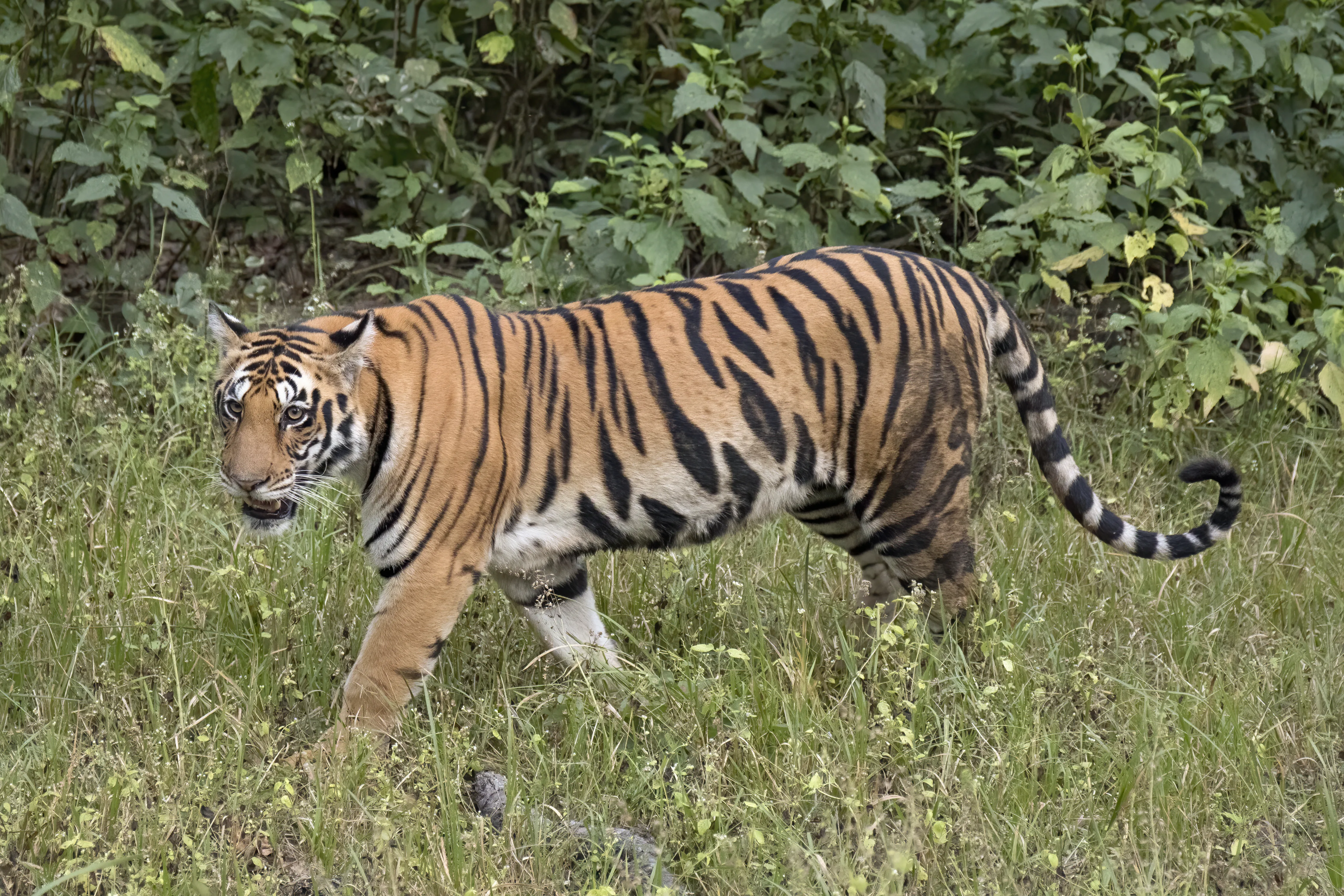
Species Profile
Panthera tigris
The lion chose the pride. The tiger chose itself.
No partner. No coalition. No backup. Just hundreds of kilograms of muscle, forest camouflage, and the power to disappear before prey knows it exists. For millions of years, the strategy worked. Then we arrived.
⚖️ 325 kg — max recorded wild male weight
💪 1,050 PSI — bite force
📐 3.3 m — max length including tail
🌍 ~3,900 — left in the wild
Source context: IUCN, Global Tiger Forum, Britannica, and San Diego Zoo.
Fast Facts
Scientific name
Panthera tigris
Big cat in the genus Panthera
Male weight
90-325 kg
Huge variation by subspecies
Female weight
65-167 kg
Usually 60-70% of male weight
Length incl. tail
2.5-3.3 m
Amur and Bengal tigers are longest
Shoulder height
0.9-1.1 m
Powerful low-slung ambush build
Bite force
~1,050 PSI
Commonly cited as the strongest big-cat bite
Top speed
49-65 km/h
Short burst, not endurance
Horizontal jump
About 10 m
Explosive close-range power
Wild lifespan
10-15 years
Captive tigers can live longer
Conservation
Endangered
IUCN Red List status
Wild population
~3,900
A severe decline from 100,000 in 1900
Living subspecies
6
Three tiger subspecies are extinct
Solitary Life
A lion pride hunts together. A wolf pack coordinates the chase. A tiger does everything alone. Solitude is not a limitation; it is a strategy built for forest cover, scattered prey, and private territory. For broader habitat context, see forest animals.
A male tiger may control 60-100 km², marking boundaries with urine, scrapes, scent, and sound.
A tiger keeps every kill, but accepts every risk. A serious injury can mean starvation.
A mother raises cubs for 18-24 months, teaching them how to become solitary hunters.
| Trait | Tiger | Lion |
|---|---|---|
| Territory | 60-100 km² for many males | 100-260 km² for a pride |
| Hunting style | Solitary ambush | Cooperative encirclement |
| Food sharing | Keeps the kill alone | Feeds by hierarchy |
| Cub protection | Mother alone | Group defense |
| Injury risk | Extreme; no backup | Shared across a group |
| Large prey | Buffalo, deer, wild boar | Buffalo, zebra, giraffe |
The Stripes
No two tigers have the same stripe pattern. Like fingerprints, stripes identify individuals while also making a massive predator disappear in broken forest light.
Vertical stripes break up the outline in forest light and shade.
A 300 kg predator can remain visually hidden while stalking prey.
Every tiger has a unique stripe pattern.
Researchers use stripes like fingerprints to identify wild individuals.
The pattern is mirrored in the skin beneath the fur.
Stripes are a body-wide developmental trait, not just a surface coat effect.
White tigers are not a separate subspecies and not true albinos. They are a recessive color variant. In the wild, that beauty is a disadvantage because it breaks camouflage. In captivity, the white line has often been maintained through inbreeding.
The Hunt
The lion hunts with numbers. The tiger hunts with patience, closing silently to within striking distance before the prey knows it exists.
~10%
individual hunting success rate often cited for solitary ambushes
~60%
many hunts happen at night or low light
Deer
common prey across many tiger landscapes
Buffalo
large regular prey requiring maximum force
Yes
tigers actively hunt and travel in water
Tigers can sprint up to 65 km/h, but only briefly. For speed context, compare them with the fastest animals and with the cheetah.
Subspecies
There were once nine tiger subspecies. Three are already gone. Six remain, each in a different world and each fighting a different battle.
Panthera tigris tigris
Sundarbans Bengal tigers live in mangrove channels, swim regularly, and are among the world's most aquatic big cats.
Panthera tigris altaica
Amur tigers recovered from roughly 40 animals in the 1940s, proving that large-cat recovery is possible with strict protection.
Panthera tigris sumatrae
Palm oil expansion and forest fragmentation make the Sumatran tiger one of the most urgent tiger conservation battles.
Indochinese, Malayan, South China
The South China tiger shows what functional extinction looks like: an animal may persist in captivity after disappearing from the wild.
| Extinct subspecies | Extinction era | Cause |
|---|---|---|
| Bali tiger | 1940s | Habitat loss and hunting |
| Caspian tiger | 1970s | Habitat loss and hunting |
| Javan tiger | 1980s | Habitat loss and prey depletion |
Conservation
~100,000
wild tigers at the start of the 20th century
~3,900
wild tigers remain today
-96%
population collapse across roughly one century
At the start of the 20th century, tigers ranged from Turkey to the Russian Far East and from Siberia to the Indonesian islands. Today, three subspecies are gone, the South China tiger may be functionally extinct in the wild, and the Malayan tiger is critically small. The Amur tiger's recovery proves tigers can come back, but only with protection, funding, and connected habitat.
Roads, farms, settlements, and logging split tiger range into isolated pieces. Forest connectivity is not optional for a wide-ranging solitary predator.
Tigers are hunted for skin, bones, teeth, and claws. Illegal trade remains one of the most persistent pressures on the species.
As forests shrink, tigers and people meet more often. Livestock attacks can trigger retaliation, and that retaliation removes breeding adults.
Tigers cannot survive on empty forest. When deer and wild boar disappear, the tiger disappears too.
Triangle Link
The largest cat on Earth vs. the King of Beasts. The tiger brings size, bite force, and solitary ambush power. The lion brings mane protection, speed, and combat experience.
Physical data favors the tiger. Defense and fighting experience complicate the answer. Historical records slightly favor tigers, but all records are biased and captive.
⚔️ Read the Full Tiger vs Lion Breakdown →Generator Links
Bengal? Amur? Sumatran? Or something that has never been seen before?
Generate Now →The liger weighs 400+ kg. The tigon is smaller than both parents. Which one will you create?
Generate Hybrid →Bite force. Body weight. 2,000 years of historical records. One honest answer.
See the Full Comparison →S-Series Species
Surprising Facts
Camera-trap researchers match wild tigers by their stripes the way forensic work matches fingerprints.
They are a color variant created by recessive genetics, and most captive lines are inbred.
A tiger can haul large carcasses into cover and feed from them for several days.
The pigment pattern is mirrored in the skin beneath the coat.
India and a few other range states have posted real conservation gains since the historic low.
A semi-aquatic tiger population has adapted to mangrove channels and island forests.
FAQ
Tiger weight varies dramatically by subspecies. Bengal tiger males commonly weigh 180-325 kg, Amur tiger males average about 180-306 kg, and Sumatran tiger males are much smaller at about 100-140 kg. Females of all subspecies are usually about 60-70% of male weight.
Approximately 3,900 tigers remain in the wild, down from an estimated 100,000 at the start of the 20th century. The Bengal tiger has the largest population, while the Malayan tiger has fewer than 120 individuals and the South China tiger may be functionally extinct in the wild.
The Amur tiger, also called the Siberian tiger, is the largest tiger subspecies and the largest wild cat on Earth. Males can exceed 300 kg in exceptional cases and are adapted to the cold forests of the Russian Far East and northeastern China.
Tiger stripes provide camouflage in forest light. Many prey animals are red-green colorblind, so orange fur can blend with dry grass, while black stripes mimic vertical shadows. Each tiger's stripe pattern is unique, so researchers can use it like a fingerprint.
Yes. Tigers are excellent swimmers and actively enter water to cool down, cross rivers, and hunt. Bengal tigers in the Sundarbans mangroves regularly swim through channels and can cover several kilometers in water.
White tigers are not a separate subspecies or albinos. They result from a rare recessive mutation that prevents normal orange pigment expression. In the wild, white coloring is a camouflage disadvantage. Modern captive white tigers descend from a narrow founder line and often suffer inbreeding-related health problems.
Tigers are ambush predators. They stalk prey for long periods, close to roughly 10-20 meters, then charge in a short burst. They usually kill with a throat bite that suffocates large prey or a neck bite that severs the spinal cord in smaller prey.
There are six living tiger subspecies: Bengal, Amur, Sumatran, Indochinese, Malayan, and South China tigers. Three historical subspecies are extinct: Bali, Caspian, and Javan tigers.
Tiger vs lion has no single definitive answer. Tigers usually have the physical edge in body mass and solitary ambush power, while lions have speed, mane protection, and more male-male fighting experience. The result depends on subspecies, terrain, age, condition, and motivation. Read the full tiger vs lion analysis.