Representative species
Common octopus
Octopus vulgaris is one of the best-studied octopus species
🐙 Most of an octopus's neurons are in its arms.
It is color blind, changes appearance at blink speed, and may be dreaming right now.
Species Profile
Nine Brains. Zero Bones. One of the Strangest Minds on Earth.
Your brain is in your skull. An octopus distributes much of its thinking through eight arms.
It is color blind, yet it can transform skin, texture, brightness, and pattern at blink speed. It has three hearts, blue blood, no bones, and a mind so different that our words keep failing.
🧠 ~500M - neurons
💪 Most - neurons outside the central brain
🎨 Blink-speed - color and texture control
❤️ 3 - hearts
Source context: Natural History Museum, Smithsonian Ocean, Current Biology, Nature, UK legislation, and NOAA Ocean Exploration.
Fast Facts
Representative species
Common octopus
Octopus vulgaris is one of the best-studied octopus species
Neuron count
~500 million
Comparable to a dog by rough count, with very different architecture
Neuron distribution
Most in the arms
Roughly two-thirds are in arm nerve cords and ganglia
Arms
8
Each arm contains rich local sensing and motor control
Suckers
Hundreds per animal
Large species can carry hundreds to thousands across all arms
Hearts
3
Two branchial hearts and one systemic heart
Blood
Blue
Copper-based hemocyanin carries oxygen
Camouflage
~200 ms scale
Color and texture shifts can happen extremely quickly
Lifespan
1-5 years
Most species live short, intense lives
Largest species
Giant Pacific octopus
Arm span can exceed 4 m in large individuals
Species count
~300
Recognized species inhabit shallow reefs and deep ocean
Conservation
Data gaps
Many species are poorly assessed compared with vertebrates
Nine Brains
Technically, the octopus has one central brain. Functionally, it behaves like a distributed mind: eight arms with dense local neural networks, plus a center that coordinates strategy. That distinction matters because the strangeness is real enough without overstating the anatomy.
Selected neural unit
Explores texture and pressure before the center knows every detail.
An octopus has roughly 500 million neurons. Unlike mammals, much of that nervous system is distributed through the arms, where local circuits handle touch, taste, grip, and movement.
Each arm can explore, taste, grip, and solve local movement problems with limited direct instruction from the central brain. The animal is coordinated, but not centrally micromanaged.
The central brain appears to set goals and integrate information while the arms work out many details. It is closer to a distributed control system than a simple command chain.
Octopus intelligence evolved on a path separate from vertebrate brains. That makes it one of the best living tests of whether intelligence has more than one architecture.
| Animal | Neuron count | System type | Distribution |
|---|---|---|---|
| Octopus | ~500 million | Distributed | Most neurons outside the central brain |
| Dog | ~500 million cortical neurons | Centralized | Brain and spinal cord lead control |
| Orca | Billions | Centralized | Large social brain |
| Gorilla | Billions | Centralized | Primate brain architecture |
| Human | ~86 billion | Centralized | Large cortex and integrated body map |
| Honeybee | ~1 million | Ganglia plus brain | Small but behaviorally capable |
Color Blind Painter
Octopuses do not see color the way we do, yet their skin can produce color, brightness, texture, warning flashes, and background matching at blink speed. The answer appears to live partly in the skin itself.
This is a lightweight visual sequence, not scientific footage: it shows the page concept without adding a heavy video file. The science behind the section is skin display control, opsins, chromatophores, iridophores, and leucophores.
Octopus eyes are usually described as having one photoreceptor class, so they do not see color the way humans do.
Cephalopod skin contains opsins and related light-response machinery, suggesting local skin photoreception may help tune camouflage.
Chromatophores, iridophores, and leucophores work together to create pigment, structural shimmer, brightness, and pattern.
Millions of tiny skin organs can shift appearance on a blink-speed timescale, letting the animal match reef, sand, shadow, or warning display.
The mimic octopus goes beyond background matching. It changes posture and behavior to resemble animals such as flatfish, lionfish, and sea snakes.
Intelligence
The whale shows intelligence through culture and long memory. The gorilla shows it through primate social cognition. The octopus shows it through a soft body that must solve movement, touch, camouflage, and escape in real time.
Some octopuses carry coconut shells or other objects as portable shelter. Carrying a tool for later use is stronger evidence than simply using an object in the moment.
Octopuses can manipulate screw-top jars and puzzle containers, using arms that taste and grip while the central brain tracks the goal.
Repeated object manipulation without an obvious survival payoff has been interpreted as play-like behavior, a rare claim for an invertebrate.
Aquarium observations and experiments suggest octopuses can respond differently to individual humans, showing memory and flexible social discrimination.
Sleeping octopuses can show rapid color and texture changes. Dreaming is still a hypothesis, but the visible sleep dynamics are striking.
Cephalopods are now part of serious animal welfare law and policy debates because evidence for pain, affect, and complex experience keeps growing.
| Ability | Octopus | Whale | Gorilla | Wolf |
|---|---|---|---|---|
| Tool use | Yes | Yes | Yes | Limited |
| Individual recognition | Yes | Yes | Yes | Yes |
| Play-like behavior | Yes | Yes | Yes | Yes |
| Culture | Limited; mostly solitary | Strong | Present | Pack traditions |
| Possible dreaming | Hypothesized | Unknown | Likely sleep cognition | Unknown |
| Nervous system | Distributed | Centralized | Centralized | Centralized |
| Typical lifespan | 1-5 years | 60-200 years | 35-40 years | 6-8 years |
Species
“Octopus” covers roughly 300 species, from palm-sized venom specialists to giant North Pacific animals and deep-sea forms that move with ear-like fins.
Hapalochlaena spp.
Blue-ringed octopuses are tiny, beautiful, and dangerous. Their warning display is one of the clearest visual stop signs in the ocean.
Thaumoctopus mimicus
The mimic octopus does not merely hide. It performs alternate bodies, selecting displays that can change how predators interpret it.
Enteroctopus dofleini
Large size makes this species a favorite for public aquariums and behavioral observation, including puzzle solving and escape behavior.
Octopus vulgaris
The common octopus is the laboratory and field reference point behind many classic findings about cephalopod behavior.
Grimpoteuthis spp.
Dumbo octopuses show how far the octopus body plan can travel: into dark, cold, high-pressure ocean where data is still scarce.
Octopus bimaculoides
Its genome helped reveal expansions in gene families linked to neural complexity, giving scientists a molecular map of a very different mind.
Life Paradox
An octopus can learn, solve, escape, camouflage, and perhaps enter vivid active sleep. Then, often within a year or two, it dies after reproduction. It is one of evolution's most compressed experiments in cognition.
Most octopuses live only a year or two. Even large species usually live just a few years, despite remarkable learning ability.
Females often stop feeding while guarding eggs and die after the brood hatches. Intelligence is packed into a brief life cycle.
Because most octopuses are solitary and short-lived, each individual starts almost from zero instead of inheriting a long social tradition.
Conservation
Most octopus species are not conservation flagships. The harder question is welfare: what do humans owe a short-lived, intelligent, solitary animal that can feel, learn, and suffer?
| Issue | Current signal | Meaning |
|---|---|---|
| Endangerment | Mostly not listed as endangered | Many species are unassessed or data-poor |
| Welfare status | Cephalopods included in UK sentience law | Policy now treats octopus experience as morally relevant |
| Farming debate | Growing controversy | High intelligence and solitary behavior make intensive farming ethically difficult |
| Climate pressure | Changing seas | Temperature, acidification, and prey shifts may alter ranges |
| Deep-sea data | Sparse | Many deep species are too poorly known for confident risk estimates |
Nine arms of thought. Blink-speed camouflage. Possibly dreaming.
The ocean's strangest intelligence is not a metaphor. It is a living animal.
🐙 Generate an Octopus →Explore
Blue-ringed? Mimic? Giant Pacific? One click to find out.
Generate Now →What if an octopus had a whale lifespan, or shark electroreception plus distributed arms?
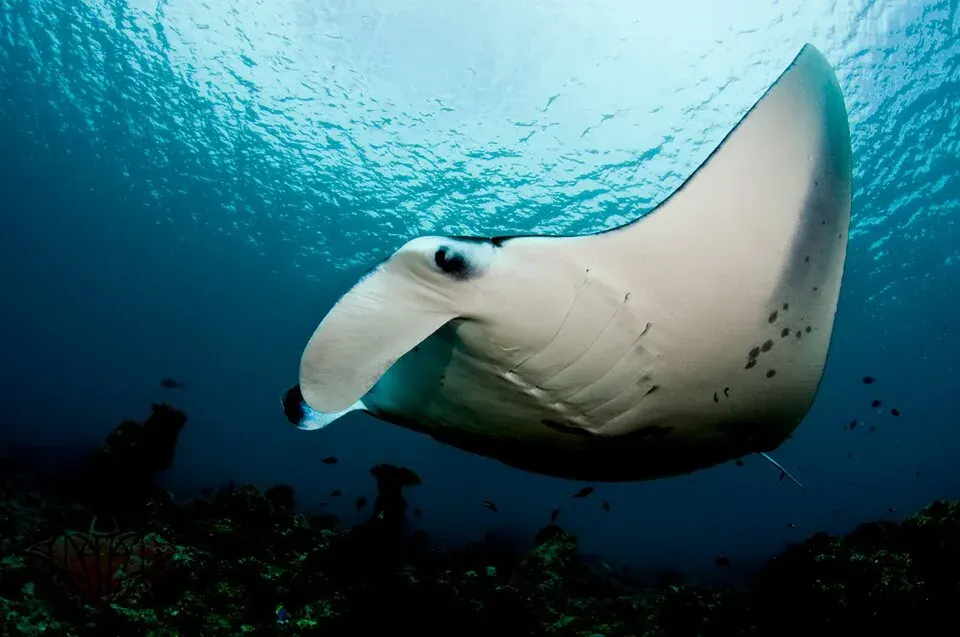
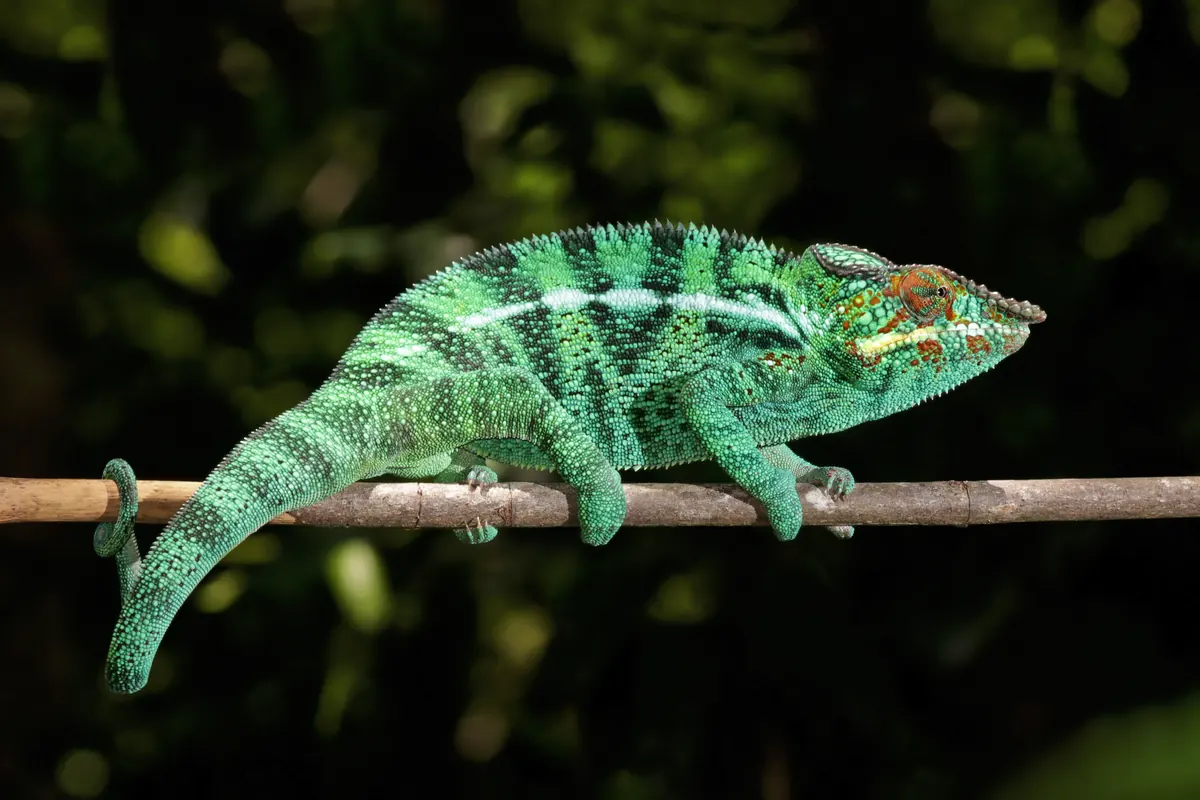
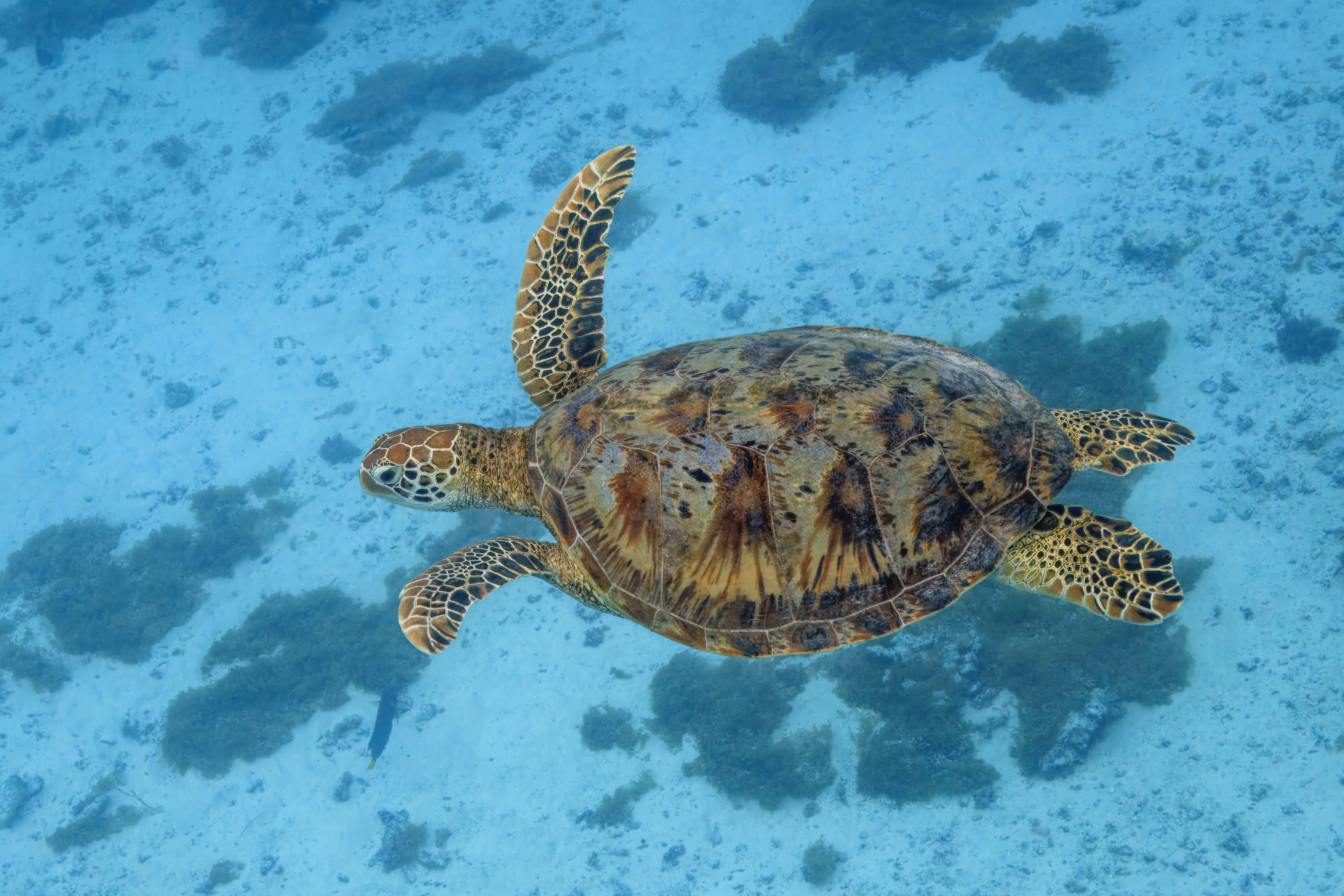
Try Hybrid Generator →Octopuses share the ocean with sharks, whales, rays, sea turtles, and deep-water mysteries.
Explore the Ocean →FAQ
Technically an octopus has one central brain, but functionally it behaves like a distributed system: the central brain plus eight highly capable arm nerve networks. Roughly two-thirds of its neurons are in its arms, where local circuits can sense, taste, grip, and coordinate movement without waiting for detailed central commands.
Octopuses do not see color the way humans do, yet their skin contains light-sensitive proteins and millions of display organs. Chromatophores, iridophores, and leucophores change pigment, shimmer, brightness, and pattern very quickly. Scientists still debate exactly how color matching works, but skin photoreception appears to be part of the answer.
Octopuses solve puzzles, open jars, use shelters, explore objects, recognize individual humans, and show sleep-like color changes. Their intelligence is unusual because it is distributed through a soft body instead of concentrated only in a central brain.
Most octopus species live only one to two years. The giant Pacific octopus can live about three to five years. Females often die after guarding eggs, making octopus intelligence one of evolution's most intense short-life experiments.
The blue-ringed octopus is the most dangerous to humans. It is small but carries tetrodotoxin, a potent neurotoxin that can cause paralysis and requires urgent medical support. The bright blue rings are a warning display when the animal is threatened.
Possibly, but it is not proven. Researchers have recorded sleeping octopuses showing rapid color and texture changes, which may reflect active sleep or replay-like states. Calling this dreaming remains a hypothesis, but it is one reason octopus sentience research is accelerating.
An octopus has three hearts. Two branchial hearts pump blood through the gills, and one systemic heart pumps oxygenated blood through the body. Octopus blood is blue because it uses copper-based hemocyanin rather than iron-based hemoglobin.
There are roughly 300 recognized octopus species. They range from small shallow-water species to the giant Pacific octopus and deep-sea dumbo octopuses. New species and new behaviors are still being documented, especially in deep water.