Representative species
Blue whale
Balaenoptera musculus; the largest animal known to have lived
🐋 Scientists documented a turn-taking acoustic exchange with a humpback whale.
Sperm whale codas show language-like structure. We still do not know what they are saying.
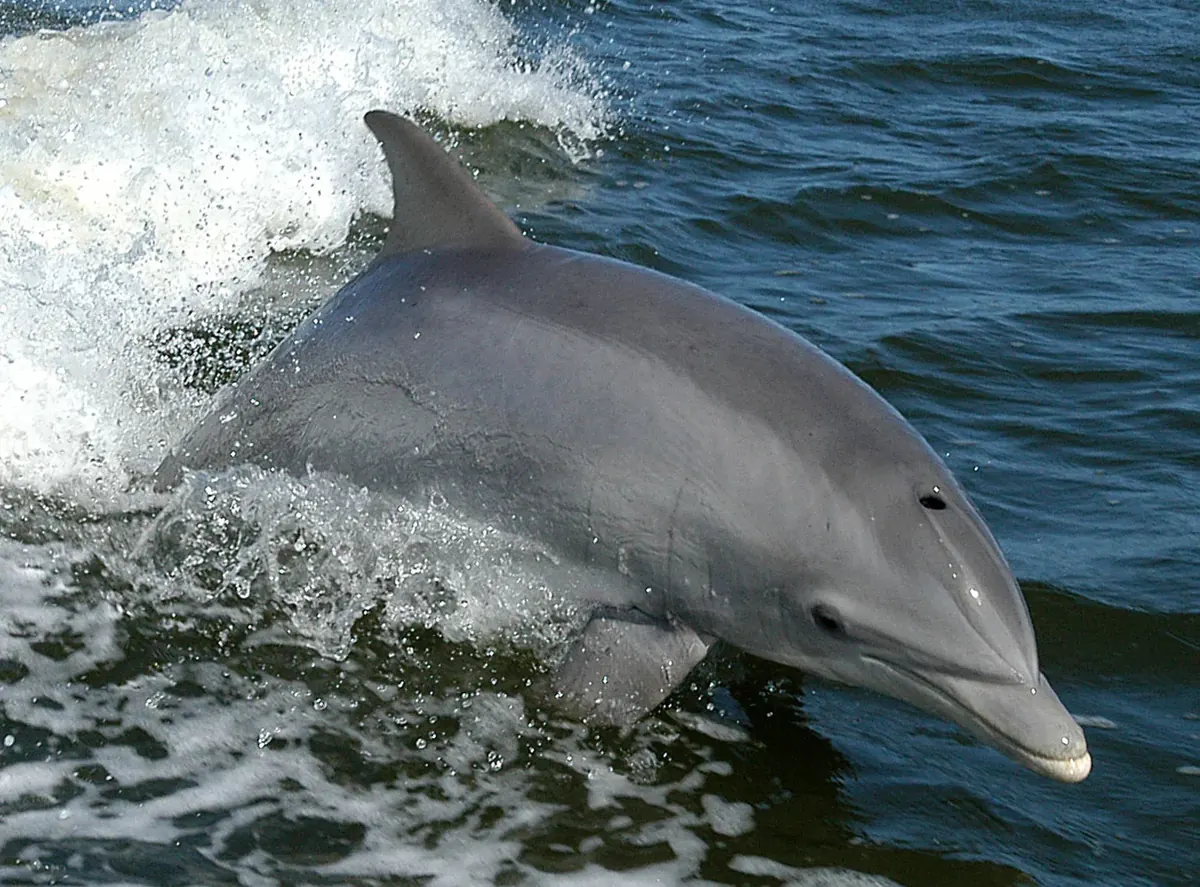
Species Profile
The Largest Mind in the Ocean
A humpback whale responded, waited, and responded again. We do not know what it meant. We know it was listening.
The largest animal ever, the heaviest known brain, pod dialects, ocean-basin songs, and a 50-million-year return from land into water. We are only now learning how much of the ocean has been speaking.
🧠 ~9 kg - sperm whale brain
📏 33 m - blue whale length
🎵 Ocean-basin - sound can travel under good conditions
🐋 ~90 - cetacean species
Source context: NOAA Fisheries, NOAA Ocean Service, PeerJ, and Nature Communications.
Fast Facts
Representative species
Blue whale
Balaenoptera musculus; the largest animal known to have lived
Maximum length
Up to about 33 m
NOAA lists blue whales up to 110 feet
Maximum weight
Up to about 190 tonnes
Large historical records vary by source and measurement quality
Heart
~180 kg
Often described as small-car sized
Brain
~8-9 kg
Sperm whales have the heaviest known animal brains
Song and calls
Ocean-basin scale
Low-frequency calls can travel huge distances under good conditions
Typical lifespan
70-90 years
Bowhead whales can live 200+ years
Deep diving
2,000+ m
Sperm whales are among the deepest-diving mammals
Social structure
Species-specific
Orcas live in stable matrilines; baleen whales are more fluid
Species count
~90 cetaceans
Whales, dolphins, and porpoises together form Cetacea
Conservation
Mixed
Blue whale is endangered; humpback status varies by population
Core sense
Sound
Whales use sound for contact, navigation, hunting, identity, and culture
The Language
Scientists are careful here: these studies do not prove whale language in the human sense. They do show turn-taking interaction, combinatorial signal structure, dialects, and cultural transmission. That is enough to change the question from “do whales make sounds?” to “how much meaning have we failed to hear?”
Whale-SETI · 2023
Researchers played a recorded humpback contact call to an adult female named Twain in Southeast Alaska. Twain approached, circled the boat, and responded in a turn-taking acoustic exchange. The study does not prove language, but it does show intentional human-whale interaction worth taking seriously.
Project CETI · 2024
A Nature Communications study found contextual and combinatorial structure in sperm whale codas. The result suggests a richer communication system than earlier coda catalogs implied, while stopping short of claiming translation.
| Signal | Species | Description | Why it matters |
|---|---|---|---|
| Codas | Sperm whale | Rhythmic click sequences | Conversation-like social units |
| Songs | Humpback whale | Long patterned vocal displays | Music-like cultural transmission |
| Dialects | Orca | Pod-specific calls | Family identity and culture |
| Echolocation | Toothed whales | Clicks and returning echoes | Navigation and hunting |
Intelligence
Whales are mammals that took land-evolved traits into the sea: warm blood, parental care, social learning, memory, and large brains. The result is a cultural ocean animal that belongs beside the elephant and gorilla in any serious discussion of nonhuman minds.
Whales and dolphins evolved big brains in a three-dimensional acoustic world. Orcas and sperm whales use memory, kinship, sound, and learned behavior as survival tools.
In resident orcas, families stay with mothers for life. Older females carry ecological knowledge about salmon runs, routes, and dangerous seasons.
Humpback song themes spread across ocean basins. Orca hunting tactics and calls differ by group. Sperm whale clans can be recognized by coda repertoires.
Cetaceans show strong social bonds and epimeletic behavior, including mothers carrying dead calves. These behaviors make conservation a cultural issue, not just a population count.
Toothed whales turn sound into a model of the world. A sperm whale or orca can inspect water, bodies, and distance through acoustic perception.
Project CETI and related bioacoustic efforts use machine learning to classify, compare, and eventually test whale signals with playback experiments.
| Animal | Core intelligence | Culture evidence | Page |
|---|---|---|---|
| 🐋 Whale | Largest brains, codas, dialects, song culture | Strong evidence for culture; language remains unproven | Read profile |
| 🐘 Elephant | Memory, mourning, matriarchal knowledge | Migration and survival knowledge pass through older females | Read profile |
| 🦍 Gorilla | Family bonds, tool use, symbolic learning in captivity | Social learning and group traditions | Read profile |
| 🐺 Wolf | Family packs, coordinated hunting, vocal identity | Pack knowledge and cooperative decision-making | Read profile |
The Return from Land
Around 50 million years ago, a hoofed land mammal lineage moved into water and never returned. The fossil record preserves the transition with unusual clarity: legs shrinking, nostrils migrating, spines changing, and sound becoming a new way to see.
Modern whales still carry vestigial pelvic and hind-limb bones inside the body. They are not useful legs; they are anatomical evidence of land ancestry.
The blowhole is a migrated nostril. Fossils show a gradual shift from front-of-snout breathing to top-of-head breathing.
Toothed whales evolved echolocation after returning to the sea. In deep or dark water, sound became vision, touch, map, and weapon.
Species
“Whale” is not one body plan. It includes filter-feeding giants, deep-diving toothed whales, Arctic specialists, social predators, and dolphins large enough to rule the food web.
Balaenoptera musculus
The blue whale is larger than any known dinosaur by mass. Its recovery is one of the central tests of whether post-whaling oceans can heal.
Orcinus orca
Orcas are dolphins taxonomically, whales culturally, and among the most socially complex predators on Earth.
Megaptera novaeangliae
Humpbacks are the great composers of the sea: their songs change, spread, and help reveal how culture can move through a nonhuman population.
Physeter macrocephalus
Sperm whales combine deep diving, huge brains, matrilineal societies, and coda systems now being studied with modern machine learning.
Monodon monoceros
The narwhal tusk is a spiral tooth packed with sensory ability, and it helped seed Europe's unicorn myth.
Balaena mysticetus
A living bowhead may carry memories of an ocean that existed before steamships, industrial whaling, and modern underwater noise.
Conservation
We are getting better at listening to whales while making the ocean harder for whales to hear. Ship noise, sonar, entanglement, prey loss, and climate change threaten not just bodies, but memory, dialect, and culture.
| Signal | Current figure | Meaning |
|---|---|---|
| Southern Resident orcas | 73 in 2024 | NOAA stock assessment census for a critically small population |
| Blue whale status | Endangered | Greatly reduced by 20th-century whaling |
| Bowhead lifespan | 200+ years | Long-lived cultures are slow to recover from loss |
| Ocean noise | Rising pressure | Shipping, sonar, and industrial noise shrink acoustic space |
We are learning to speak whale.
We need to make sure there are whales left to speak to.
🐋 Generate a Whale →Explore
Blue whale? Orca? Narwhal? Sperm whale? One click to find out.
Generate Now →What if a whale had shark electroreception, or an orca mind with a narwhal tusk?
Try Hybrid Generator →Whales share their world with sharks, octopuses, sea turtles, and deep-ocean mysteries.
Explore the Ocean →Ocean Species Navigation
FAQ
The evidence is growing but not conclusive. Researchers have documented turn-taking acoustic interaction with a humpback whale, sperm whale codas show contextual and combinatorial structure, and orca pods have culturally transmitted dialects. Whether this counts as language depends on the definition, but the structural complexity is far beyond simple noise.
The blue whale is the largest whale and the largest animal known to have lived on Earth. NOAA lists blue whales up to about 110 feet, or 33 meters. Very large individuals can weigh roughly 190 tonnes, and the species remains endangered after industrial whaling.
Whales are among the most cognitively complex animals. Orcas show pod dialects, cooperative hunting, long-term social bonds, and culture. Sperm whales have the largest known animal brains and complex coda systems. Humpbacks show song culture that can spread across populations.
Most large whales can live many decades, often around 70 to 90 years depending on species. Bowhead whales are the longest-lived marine mammals and may live 200-plus years. This long life makes whale culture powerful but also slow to recover when old individuals are lost.
Whales evolved from land mammals roughly 50 million years ago. Fossils such as Pakicetus, Ambulocetus, Rodhocetus, and Dorudon show the transition from walking mammals to fully aquatic whales. Modern whales still retain vestigial pelvic bones inside the body.
Project CETI, the Cetacean Translation Initiative, uses machine learning, bioacoustics, linguistics, and field biology to study sperm whale communication. A 2024 Nature Communications paper found contextual and combinatorial structure in sperm whale codas, an important step toward testing how much information those signals carry.
Whale threats vary by species, but major pressures include the legacy of commercial whaling, ship strikes, entanglement, prey decline, chemical pollution, climate change, and ocean noise. Some populations are recovering; others, such as Southern Resident orcas, remain critically small.
Whale sound can travel huge distances underwater, especially low-frequency calls in favorable ocean conditions. The exact range depends on frequency, depth, water temperature, noise, and geography. Ocean noise from shipping and industry reduces the distance over which whales can hear each other.