Shark strategy
If it works, keep it
The shark's basic package is ancient: streamlined body, cartilaginous skeleton, replaceable teeth, and sensory systems tuned for water. Stability was the winning innovation.
🦈 Great white sharks avoid areas where orcas appear.
The ocean's apex predator flees from a whale.
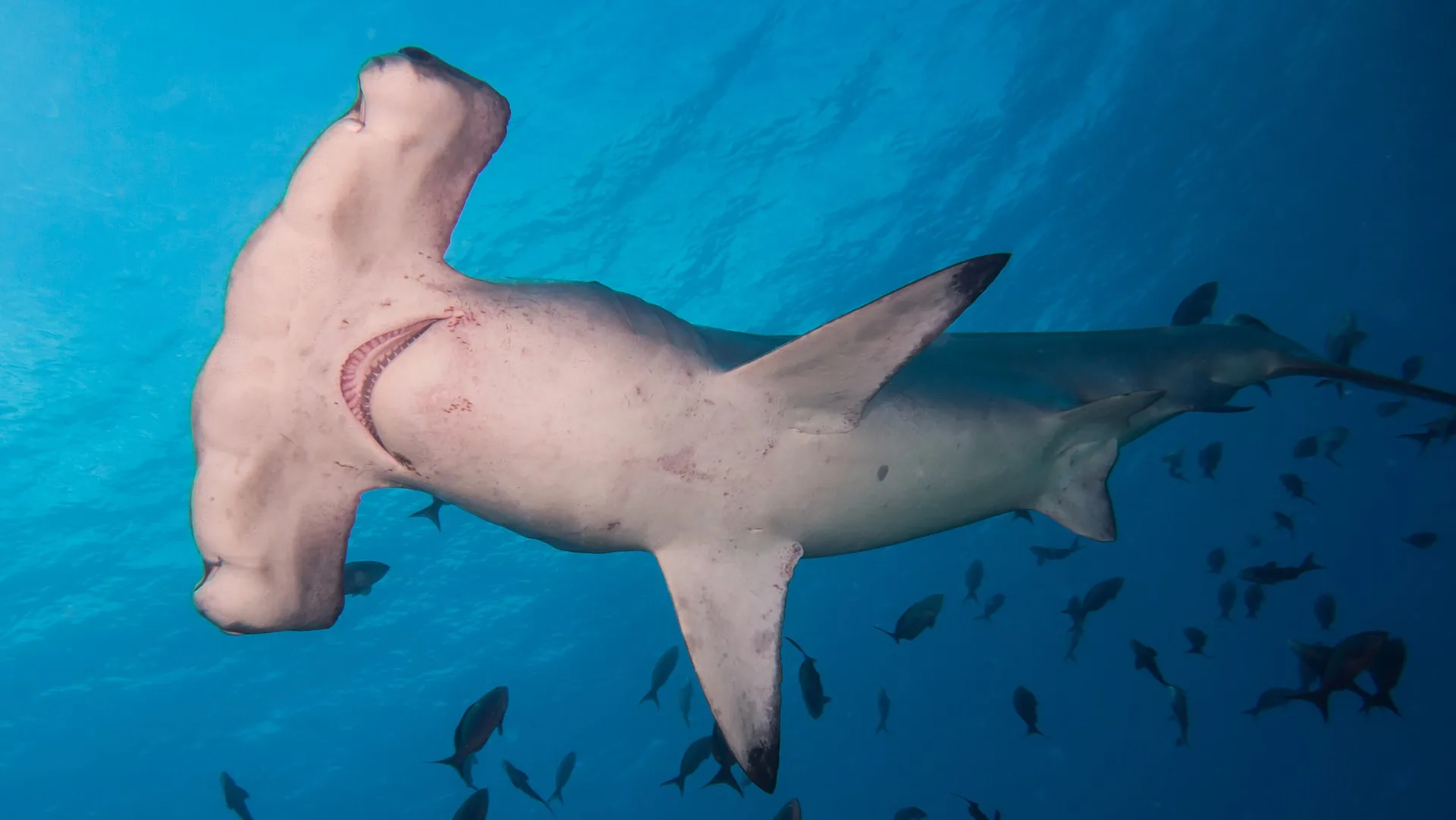
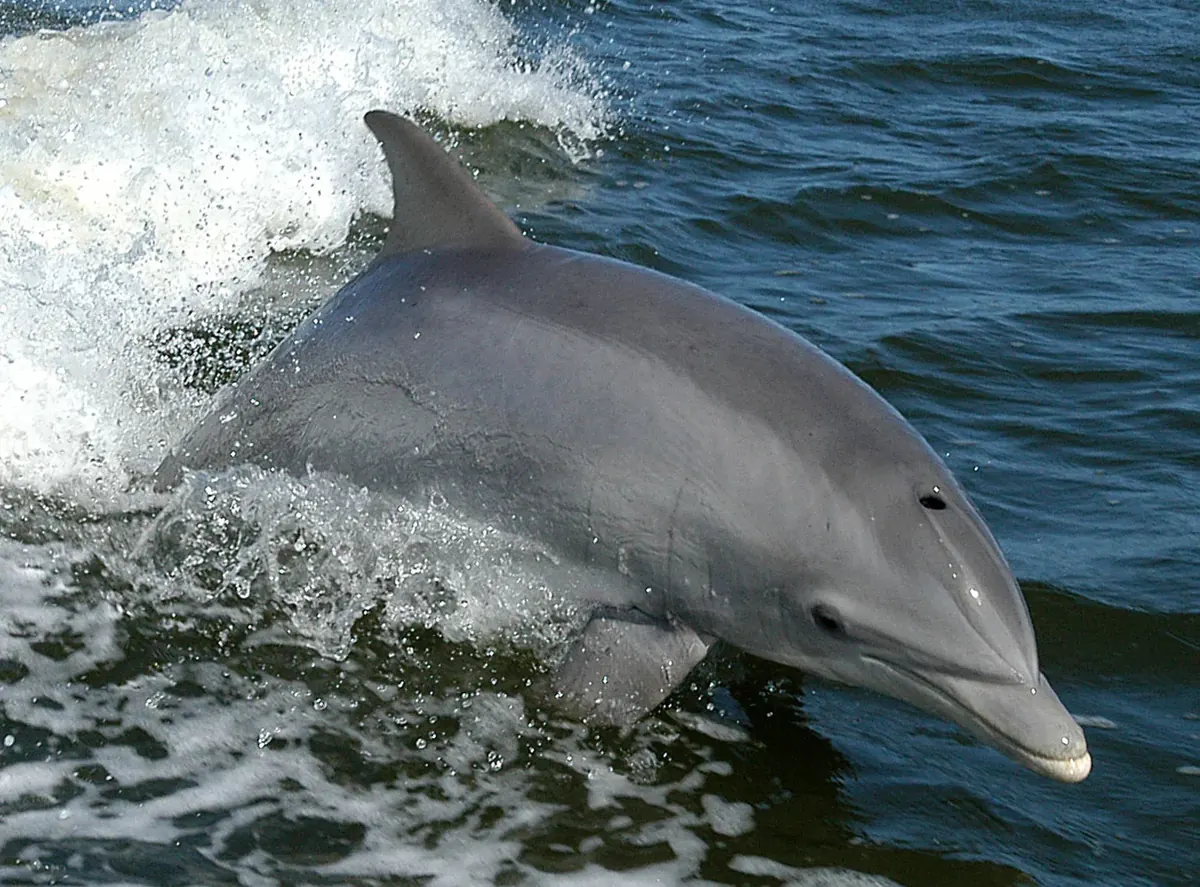
Comparison Series
This is not a battle. It is 450 million years of sensory evolution meeting 50 million years of mammal intelligence.
Sharks barely changed because they did not need to. Whales changed everything because they returned to the ocean carrying a mammal brain.
Shark
Whale
The Numbers
The highest-intent matchup is great white shark vs orca. The numbers show why direct encounters favor the orca, even though the shark wins the evolutionary age contest.
| Trait | Great White Shark | Orca |
|---|---|---|
| Scientific name | Carcharodon carcharias | Orcinus orca |
| Length | 4-6 m | 5-8 m |
| Weight | 680-1,100 kg | 2,700-5,400 kg |
| Top speed | ~56 km/h | ~56 km/h |
| Bite force | ~1.8 tonnes estimated | ~19,000 N estimated |
| Brain weight | ~34 g | ~5,600 g |
| Social structure | Mostly solitary | Matrilineal family pods |
| Lifespan | ~70 years | ~60-90 years |
| Primary sense | Electroreception and lateral line | Echolocation and social memory |
| Hunting strategy | Solo ambush and sensory tracking | Cooperative tactics and communication |
| Conservation | Vulnerable | Population-specific risk |
Biggest vs Biggest
The biggest shark is enormous. The biggest whale is in a different category.
| Trait | Whale Shark | Blue Whale |
|---|---|---|
| Length | Whale shark: up to about 12 m | Blue whale: up to about 33 m |
| Weight | Whale shark: up to about 21.5 tonnes | Blue whale: up to about 190 tonnes |
| Diet | Filter-feeds plankton and small fish | Filter-feeds krill |
| Record | Largest fish on Earth | Largest animal in Earth history |
Ancient vs New
When whale ancestors returned to the sea, sharks had already survived several extinction pulses. That age gap explains why one lineage conserved a perfect design while the other evolved fast.
Shark strategy
The shark's basic package is ancient: streamlined body, cartilaginous skeleton, replaceable teeth, and sensory systems tuned for water. Stability was the winning innovation.
Whale strategy
Whales returned to the ocean with mammalian traits: warm blood, parental care, big brains, social learning, and the ability to turn sound into culture.
Senses vs Intelligence
This is not smart versus stupid. It is two kinds of ocean cognition: the shark as a self-contained sensory machine, the orca as a social mind inside a family system.
| Dimension | Great White Shark | Orca |
|---|---|---|
| Core weapon | Six-sense sensory system | Large brain plus cooperation |
| Brain weight | ~34 g | ~5,600 g |
| Hunting mode | Solitary, sensory-driven | Cooperative, tactics-driven |
| Learning | Limited compared with mammals | Highly developed social learning |
| Communication | Body posture and close-range signals | Calls, clicks, dialects |
| Adaptation speed | Slow physiological and behavioral tuning | Fast cultural learning |
The Real Fight
This is not hypothetical. It has been documented, and the pattern is clear enough to change how white sharks use entire feeding areas.
1997
Researchers documented killer whales preying on a white shark near the Farallon Islands. The event helped confirm that the ocean's famous shark predator has predators of its own.
2017
South African observations linked killer whale presence with sharp white shark absences. Some carcasses had liver-targeted injuries, suggesting specialized feeding.
Pattern
Tagged and observed white sharks can leave productive feeding areas after killer whale encounters. Avoidance can matter as much as direct predation.
In a direct great white vs orca encounter, the orca has the advantage: more mass, cooperative behavior, and learned tactics. But that is a tactical verdict, not a declaration that whales are better than sharks.
Ecology
The real question is not which animal is better. The real question is what breaks when either one disappears.
Large sharks remove weak, sick, or vulnerable prey and keep mid-level predators from overrunning reefs, seagrass beds, and nearshore systems.
Killer whales are apex predators, but also cultural animals. Hunting methods, prey preferences, calls, and travel knowledge pass through family lines.
Mid-level predators can surge, smaller prey collapse, and coral or seagrass systems can lose balance. The ocean gets noisier, simpler, and less stable.
Predator pressure shifts across seals, sharks, whales, and fish. The exact direction varies by region because orca cultures specialize on different prey.
Conservation
Sharks face a numbers crisis. Some orcas face a culture-and-demography crisis. Both crises come from human activity.
| Measure | Figure | Meaning |
|---|---|---|
| Shark deaths | ~100 million annually | Broad global estimate across fisheries, fin trade, and bycatch |
| Oceanic shark decline | ~70% since 1970 | Reported for oceanic sharks and rays |
| Southern Resident orcas | 73 in 2024 | Critically small endangered population |
| Orca threats | Prey, noise, pollution | Especially Chinook salmon decline, vessel noise, and contaminants |
Verdict
In a direct fight, orca wins. In evolutionary longevity, shark wins. In ecological importance, both are irreplaceable. In the face of human activity, both are losing.
| Dimension | Winner | Reason |
|---|---|---|
| Direct fight | Orca | Size, cooperation, and tactics |
| Evolutionary history | Shark | 450 million years of survival |
| Brain and intelligence | Orca | Much larger brain and cultural learning |
| Sensory system | Shark | Electroreception, lateral line, and ancient water-tuned senses |
| Social complexity | Orca | Dialects, matrilines, and pod culture |
| Survival resilience | Shark | Survived all major mass extinctions |
| Adaptability to new prey | Orca | Culture can spread new tactics |
| Current human pressure | Both losing | Different crises, same source: human activity |
Sharks and orcas are not enemies in a cartoon bracket. They are two working systems inside the same ocean: one built from ancient sensation, one built from mammal intelligence. The ocean needs both.
Dive Deeper
Use the full shark guide, the hybrid generator, or the ocean hub to keep moving through the marine network.
450 million years. Six senses. 500+ species. The full story.
Read Shark Guide →What if a shark had an orca's intelligence, or a whale's size with shark electroreception?
Try Hybrid Generator →Sharks and whales share their world with octopuses, giant squid, and stranger creatures.
Explore the Ocean →Comparison Series
More structured comparisons across the Animal Generator knowledge graph.
FAQ
Short answers for featured snippets and search-intent matching.
It depends on the species. In documented great white shark versus orca encounters, orcas have the advantage because they are larger, hunt cooperatively, and can exploit shark tonic immobility. Against a blue whale, no living shark is a realistic direct threat.
By measurable cognitive and social metrics, yes. Orcas have much larger brains, pod-specific calls, long-term social bonds, cultural hunting methods, and cooperative tactics. Sharks are not unintelligent; they rely on an ancient, highly effective sensory strategy rather than mammal-style culture.
Yes, in documented cases. Research has shown white sharks leaving feeding areas after killer whale encounters, and South African observations link orca presence with extended white shark absences. The behavior suggests active risk avoidance.
Whales are much bigger. The blue whale can reach about 33 meters and 190 tonnes. The largest shark, the whale shark, reaches about 12 meters and around 21.5 tonnes. Great white sharks are smaller still at roughly 4-6 meters.
Sharks are about nine times older as a group. Sharks appeared roughly 450 million years ago, while whale ancestors returned to the ocean around 50 million years ago. Sharks are ancient fish; whales are mammals that re-entered the sea.
Orcas eat sharks because shark liver is rich in energy-dense oils. Some orca groups appear to specialize in shark hunting and can pass successful tactics through social learning, including flipping sharks to induce tonic immobility.
Both face serious threats, but in different ways. Sharks face a huge numbers crisis from fishing and bycatch, with oceanic sharks and rays down about 70 percent since 1970. Some orca populations, especially Southern Residents, face a cultural and demographic crisis from prey loss, pollution, and vessel noise.