๐Ÿง The penguin cannot fly. It can dive to 500 meters, hold its breath for 20 minutes, and swim at 36 km/h.

It chose the better option.

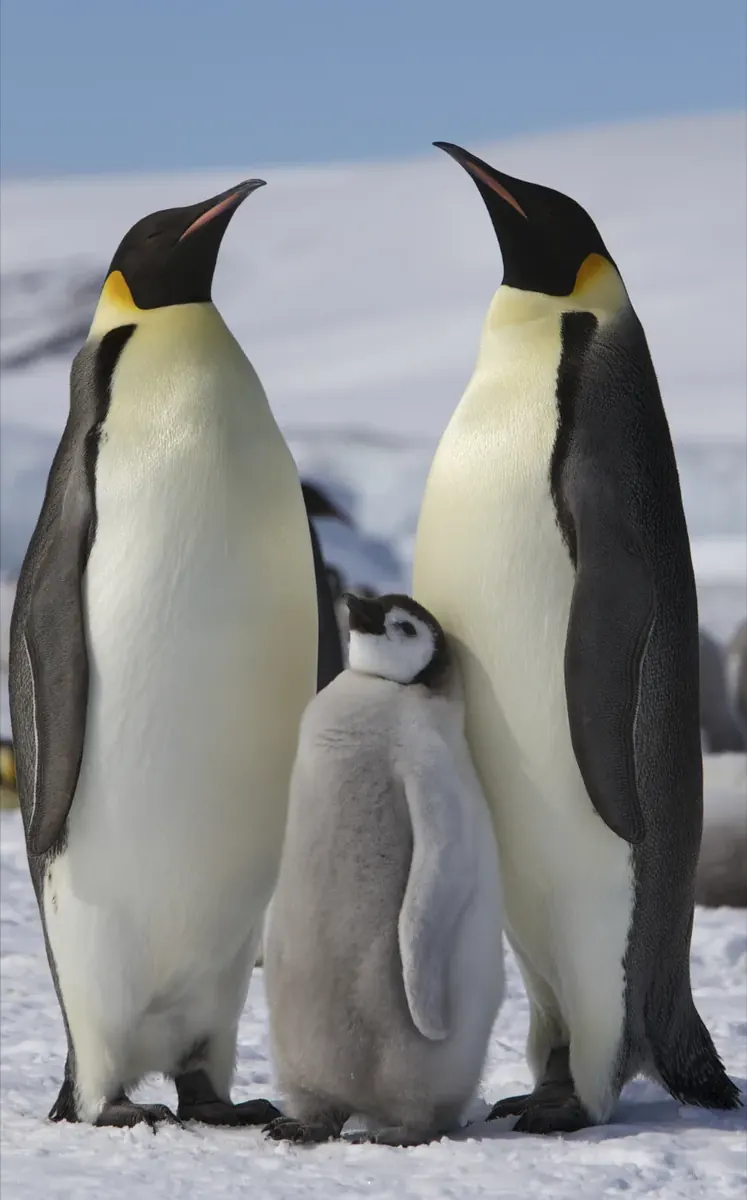
Penguin standing on Antarctic ice

Species Profile

Penguin

The Bird That Traded the Sky for the Sea

A penguin cannot fly. That is not failure. It is an evolutionary choice that made the Southern Ocean worth more than the air above it.

Eighteen species, the deepest diving bird on Earth, hidden knees, pebble rituals, and a climate future tied to sea ice.

18

Species

500m+

Max dive

36 km/h

Top speed

60M yrs

Evolution

20+ min

Breath

-60ยฐC

Survival

Evolution

The 60-Million-Year Choice: Why Penguins Can't Fly

Flight is expensive. It requires a body built for air. Penguin ancestors made a different calculation: the Southern Ocean was full of fish, squid, and krill, and the sea rewarded a body that could dive.

What penguins gave upWhat they gainedWhy it mattered
Hollow bonesDense bonesBetter diving and less buoyancy
Air wingsFlipper-like wingsPowerful underwater propulsion
Aerial shapeHydrodynamic shapeEfficient swimming through dense water
Flight in airFlight underwaterThe same wingbeat logic in a different medium
Warm-climate flexibilityPolar survivalInsulation, huddling, and heat retention

Penguins do not simply swim. They fly underwater. Their flippers use the same basic motion as wings in flight; only the medium changed.

18 species

All 18 Penguin Species: From Tiny to Towering

Taxonomists disagree on a few boundaries, but 18 species is the common working count. The range is astonishing: a 1.2 kg little blue penguin and a 45 kg emperor penguin are both the same evolutionary answer to cold water.

Emperor Penguin

Aptenodytes forsteri

HeightUp to 122 cm
WeightUp to 45 kg
Dive500 m+
Breath20+ minutes
HabitatAntarctica only
StatusEndangered

The emperor penguin breeds through the Antarctic winter. The male can stand for weeks on sea ice, balancing one egg on his feet, eating nothing, and huddling with thousands of other fathers while the female returns to sea to feed.

King Penguin

Aptenodytes patagonicus

HeightUp to 95 cm
WeightUp to 16 kg
RangeSub-Antarctic islands
Breeding14-16 months
StatusLeast Concern

King penguins take so long to raise one chick that they usually cannot breed every year. Their strategy is not speed. It is sustained parental investment.

Gentoo Penguin

Pygoscelis papua

SpeedUp to 36 km/h
Height75-81 cm
RangeAntarctic Peninsula
StatusLeast Concern

The gentoo penguin is the speed specialist. Underwater, it can move several times faster than an Olympic swimmer.

Macaroni Penguin

Eudyptes chrysolophus

PopulationMillions
DietMostly krill
RangeSub-Antarctic
StatusVulnerable

The macaroni penguin was named for 18th-century flamboyant fashion. Its yellow head plumes are biology with a sense of theatre.

Little Blue Penguin

Eudyptula minor

HeightAbout 33 cm
WeightAbout 1.2 kg
RangeAustralia, New Zealand
StatusLeast Concern

The little blue penguin is the smallest penguin on Earth and the only one with blue-toned plumage.

Galapagos Penguin

Spheniscus mendiculus

RangeGalapagos Islands
PopulationVery small
Climate trickCold Humboldt Current
StatusEndangered

The Galapagos penguin proves penguins do not need cold air. They need cold water.

African Penguin

Spheniscus demersus

RangeSouth Africa, Namibia
CallDonkey-like bray
ThreatFood scarcity, fishing
StatusEndangered

The African penguin is a warning system for coastal food webs. When sardines and anchovies disappear, penguin colonies feel it first.

18 species size signal

Little Blue Penguin

1.2 kg / 33 cm

Galapagos Penguin

2.5 kg / 49 cm

African Penguin

3.1 kg / 60-68 cm

Humboldt Penguin

4 kg / 56-70 cm

Magellanic Penguin

4.5 kg / 61-76 cm

Fiordland Penguin

3.7 kg / 55-60 cm

Snares Penguin

3.4 kg / 50-70 cm

Erect-crested Penguin

4.2 kg / 50-70 cm

Rockhopper Penguin

2.5 kg / 45-58 cm

Northern Rockhopper Penguin

2.5 kg / 45-58 cm

Royal Penguin

5 kg / 65-76 cm

Macaroni Penguin

5.5 kg / 70-71 cm

Adelie Penguin

3.6-6 kg / 46-71 cm

Chinstrap Penguin

4.5 kg / 68-76 cm

Gentoo Penguin

5-8.5 kg / 75-81 cm

Yellow-eyed Penguin

5-8 kg / 62-79 cm

King Penguin

11-16 kg / 85-95 cm

Emperor Penguin

Up to 45 kg / Up to 122 cm

SpeciesScientific nameHeightWeightRangeStatusSignature
Little Blue PenguinEudyptula minor33 cm1.2 kgAustralia, New ZealandLeast ConcernSmallest penguin and the only blue-toned penguin.
Galapagos PenguinSpheniscus mendiculus49 cm2.5 kgGalapagos IslandsEndangeredOnly penguin found north of the equator; dependent on cold currents.
African PenguinSpheniscus demersus60-68 cm3.1 kgSouth Africa, NamibiaEndangeredAlso called the jackass penguin for its braying call.
Humboldt PenguinSpheniscus humboldti56-70 cm4 kgChile, PeruVulnerableLives along the cold Humboldt Current.
Magellanic PenguinSpheniscus magellanicus61-76 cm4.5 kgArgentina, Chile, FalklandsLeast ConcernA burrow-nesting South American penguin.
Fiordland PenguinEudyptes pachyrhynchus55-60 cm3.7 kgNew ZealandNear ThreatenedA forest-edge penguin with yellow eyebrow crests.
Snares PenguinEudyptes robustus50-70 cm3.4 kgSnares IslandsVulnerableBreeds only on a tiny New Zealand island group.
Erect-crested PenguinEudyptes sclateri50-70 cm4.2 kgBounty and Antipodes IslandsEndangeredOne of the least-studied penguins.
Rockhopper PenguinEudyptes chrysocome45-58 cm2.5 kgSub-Antarctic islandsVulnerableNamed for hopping across steep rocky colonies.
Northern Rockhopper PenguinEudyptes moseleyi45-58 cm2.5 kgTristan da Cunha, Amsterdam IslandEndangeredA severely threatened crested penguin.
Royal PenguinEudyptes schlegeli65-76 cm5 kgMacquarie IslandNear ThreatenedNearly all breeding occurs on Macquarie Island.
Macaroni PenguinEudyptes chrysolophus70-71 cm5.5 kgSub-Antarctic islandsVulnerableThe most numerous penguin species in many estimates.
Adelie PenguinPygoscelis adeliae46-71 cm3.6-6 kgAntarcticaLeast ConcernA classic Antarctic species famous for pebble nests.
Chinstrap PenguinPygoscelis antarcticus68-76 cm4.5 kgAntarctic Peninsula, islandsLeast ConcernNamed for the black line under its chin.
Gentoo PenguinPygoscelis papua75-81 cm5-8.5 kgAntarctic Peninsula, sub-AntarcticLeast ConcernOften cited as the fastest swimming penguin.
Yellow-eyed PenguinMegadyptes antipodes62-79 cm5-8 kgNew ZealandEndangeredOne of the rarest and most distinctive penguins.
King PenguinAptenodytes patagonicus85-95 cm11-16 kgSub-Antarctic islandsLeast ConcernSecond largest penguin with an unusually long breeding cycle.
Emperor PenguinAptenodytes forsteriUp to 122 cmUp to 45 kgAntarcticaEndangeredLargest penguin; deepest-diving bird; sea-ice dependent.

Masters of the deep

How Penguins Swim

The penguin is one of the most hydrodynamic birds on earth. Dense bones reduce buoyancy, flippers create lift in water, and the body becomes a living torpedo.

RecordSpeciesFigure
Fastest swimmerGentoo penguinUp to 36 km/h
Deepest diveEmperor penguin500 m+
Longest breathEmperor penguin20+ minutes
Typical divesMost species20-100 m
Daily travelForaging adultsCan cover tens of kilometers

Featured snippet target

Do Penguins Have Knees?

Yes. Penguins have knees.

A penguin has a full leg skeleton: femur, knee joint, tibia, ankle, and foot. The upper leg and knee are hidden inside the body under feathers and fat. What looks like the whole leg is mostly lower leg and foot.

That hidden architecture keeps the center of gravity low on ice and keeps the body streamlined in water. The waddling is not clumsy; it is a compromise that works.

Habitat

Where Penguins Live: Not Just Antarctica

Penguins live across the Southern Hemisphere, from Antarctic sea ice to temperate beaches and even the Galapagos. The rule is not cold air. The rule is productive cold water.

RegionRepresentative speciesHabitat logic
AntarcticaEmperor, Adelie, chinstrap, gentooIce, coast, and cold Southern Ocean
Sub-AntarcticKing, macaroni, rockhopper, royalWindy islands and rich cold currents
South AmericaMagellanic, Humboldt, GalapagosCold currents along warmer coasts
Southern AfricaAfrican penguinTemperate coastal colonies
Australia / New ZealandLittle blue, Fiordland, Snares, yellow-eyedBeaches, burrows, forest edges

The Galapagos penguin lives near the equator because the Humboldt Current brings cold, nutrient-rich water north. Penguins need cold water more than cold air.

Diet

What Penguins Eat: Efficient Ocean Hunters

Penguins are carnivores built around pursuit hunting. Their diets vary by latitude and species, but the core menu is fish, squid, and krill.

SpeciesPrimary preyHunting pattern
Emperor PenguinFish, squid, krillDeep pursuit dives under sea ice
King PenguinLanternfish, squidLong foraging trips
Gentoo PenguinFish, squid, krillFast pursuit swimming
Macaroni PenguinKrillMajor Southern Ocean krill predator
African PenguinSardines, anchoviesHighly affected by fisheries and prey shifts
Little Blue PenguinSmall fish, squidNearshore hunting

Food web link

Krill ties penguins to the larger Southern Ocean system. When sea ice changes, krill changes; when krill changes, penguins, fish, seals, and whale facts all become part of the same story.

Mating and emotion

Penguin Love: Pebbles, Partners, and Chicks

Penguin courtship is practical and intimate at the same time: nest stones, voice recognition, shared chick care, and repeated returns to the same breeding ground.

Pebble ritual

Adelie and gentoo penguins use pebbles as nest material and courtship signals. A good stone has value.

Seasonal fidelity

Many penguins reunite with the same partner across seasons, especially after successful breeding.

Voice recognition

Parents and partners recognize calls in colonies where thousands of birds look similar.

Shared care

Penguin parenting is labor: feeding trips, guarding, warming, and constant energy tradeoffs.

Climate pressure

The Climate Threat: What Penguins Are Losing

Penguins evolved for predictable oceans and stable breeding windows. Climate change breaks both: sea ice forms late, breaks early, prey shifts, and chicks can fail before they reach waterproof age.

Sea ice loss

Emperor penguins need stable sea ice from breeding through chick fledging. In 2022, four of five monitored Bellingshausen Sea colonies suffered catastrophic breeding failure after early ice loss.

Krill decline

Krill depend on sea ice habitat. When sea ice shrinks, the food web beneath penguins, fish, seals, and whales becomes less predictable.

Warming oceans

Warmer water can push prey deeper or farther from colonies, forcing adults to travel longer and leave chicks hungry for longer periods.

Overfishing

Fisheries can compete with penguins for sardines, anchovies, and krill, especially near breeding colonies where parents must return quickly.

Disease and pollution

Oil destroys feather waterproofing, and climate-linked disease pressure can reach colonies that were previously protected by colder conditions.

Catastrophic signal

In 2022, record-low Antarctic sea ice led to catastrophic breeding failure at multiple emperor penguin colonies in the Bellingshausen Sea. Chicks entered the ocean before waterproof feathers were ready.

IUCN bucketSpecies in this guide
EndangeredEmperor, African, Galapagos, Yellow-eyed, Erect-crested, Northern Rockhopper
VulnerableHumboldt, Macaroni, Rockhopper, Snares
Near ThreatenedFiordland, Royal
Least ConcernKing, Gentoo, Adelie, Chinstrap, Little Blue, Magellanic

Comparison

Penguin vs Puffin: Same Problem, Different Solution

Penguins and puffins look similar because cold oceans ask similar questions. But they are not close relatives. Puffins kept flight. Penguins chose the deep.

FeaturePenguinPuffin
Can fly?NoYes
HemisphereSouthernNorthern
Related?No; convergent evolutionNo; alcid seabird
Size33-122 cm25-30 cm
Swim speedUp to 36 km/hUp to about 10 km/h
Dive depthUp to 500 m+Up to about 60 m
DietFish, squid, krillFish
BeakSimple, pointedColorful, deep
Evolution verdictChose the deepKept the sky
๐Ÿฆˆ shark facts and ocean predator context โ†’

Fast facts

Penguin Fast Facts

QuestionAnswerContext
Species18 commonly recognizedTaxonomic authorities vary from 17 to 19
FamilySpheniscidaeAll living penguins belong to one family
LargestEmperor penguinUp to about 122 cm and 45 kg
SmallestLittle blue penguinAbout 33 cm and 1.2 kg
Fastest swimmerGentoo penguinOften cited up to 36 km/h underwater
Deepest diverEmperor penguinMore than 500 m; deeper than any other bird
Longest diveEmperor penguinMore than 20 minutes
RangeSouthern HemisphereGalapagos penguin reaches just north of the equator
DietFish, squid, krillPrey mix varies by species and region
KneesYesHidden inside the body under feathers and fat
ThreatsClimate, fishing, pollutionSea ice loss and prey shifts are central risks
Core adaptationUnderwater flightWings became flippers rather than failed wings

FAQ

Penguin Questions

How many species of penguins are there?+

Most sources recognize 18 living penguin species, though taxonomic authorities vary from 17 to 19. They range from the emperor penguin at up to about 122 cm and 45 kg to the little blue penguin at about 33 cm and 1.2 kg.

Do penguins really have knees?+

Yes. Penguins have femurs, knee joints, tibias, ankles, and feet. Their knees and upper legs are hidden inside the body under feathers and fat, so the visible part looks short. The hidden knee position helps keep the body stable and streamlined.

Why can't penguins fly?+

Penguins evolved from flying birds, but natural selection favored swimming over flight. Their bones became denser, their wings became flippers, and their bodies became hydrodynamic. They cannot fly in air, but they use a wing-like motion to fly underwater.

Are penguins endangered?+

Several penguin species are endangered or vulnerable. Current conservation concern includes emperor, African, Galapagos, yellow-eyed, erect-crested, northern rockhopper, macaroni, Humboldt, rockhopper, and Snares penguins. Threats include sea ice loss, warming oceans, fishing pressure, disease, and pollution.

What do penguins eat?+

Penguins are carnivores. Depending on species and location, they eat fish, squid, and krill. Emperor and king penguins rely heavily on fish and squid, macaroni penguins eat large amounts of krill, and African penguins feed on sardines and anchovies.

Where do penguins live?+

Penguins live across the Southern Hemisphere, not only in Antarctica. They are found in Antarctica, sub-Antarctic islands, South America, the Galapagos Islands, southern Africa, Australia, and New Zealand. They need productive cold water more than cold air.